
Case: Longer-lasting colour using less water
At Oase Outdoors, we are always looking for new ways to reduce the impact of our products. This is where our largest footprint is found, and where material choices and production methods can make a significant difference.
For the 2027 collection, we are shifting to solution-dyed fabric for a wide range of flysheets used in Outwell® tents and vehicle awnings. The change significantly reduces water use in the dyeing process, while also giving campers a more fade-resistant flysheet.
Dyeing earlier in the process
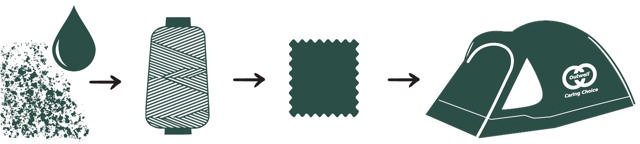
In solution-dyed fabric production, colour pigments are added at an early stage directly to the raw material before it is melted and formed into pellets. These pellets are then processed into yarn, which is used to weave the tent flysheet.
This differs from traditional batch-dyeing methods, where undyed materials first undergo fibre production and are then dip-dyed in coloured water to achieve the desired fabric colour.
From the 2027 collection, solution-dyed flysheet fabric will be used for Outwell Premium Air, Deluxe Air, Cardinal, Compact and Encounter tents, as well as Superior Air Touring, Road Trip Air, Active and Touring Canopies vehicle awnings.
Water savings and cleaner wastewater
At first glance, this may not sound like a major difference, but the solution-dyed process creates several benefits. It requires significantly less water during production, with water savings of more than 60%*. In addition, the process generates significantly less wastewater, which is not coloured in the same way as wastewater from traditional batch-dyeing. This helps reduce the impact on local ecosystems.
Our product life cycle assessments also show a 14% energy saving compared with traditional fabric production**.
Campers benefit not only from fabric produced with significantly lower water use, but also from improved colour performance. In our lab tests,*** the solution-dyed flysheet achieved the highest grade for fade resistance: 8 out of 8. Because the colour is added at an early stage, the fabric gains improved resistance to fading over time when exposed to sunlight.
For us at Oase Outdoors, this is a good example of how material choices can support both lower environmental impact and better product performance. By reducing water use and improving wastewater quality, while also increasing colour fastness, solution-dyed fabric helps us offer durable, high-quality products for the campsite.
*Based on available tests from our manufacturers
**Calculated, but not verified, using the Målbar tool
*** Conducted by Bureau Veritas
.jpg&width=200&quality=100)
.jpg&width=200&quality=100)
.jpg&width=200&quality=100)