
.jpg&width=640&format=webp&quality=70)
Case: Minimising plastic in packaging
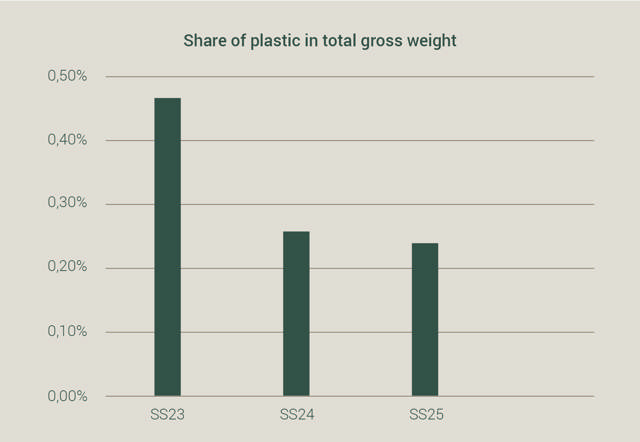
One of our efforts to lower our impact at Oase Outdoors has been to reduce the use of plastic in our packaging. At the same time, this requires a careful balance, as our products must be transported and handled safely - and our efforts should never compromise our high standards for quality and product protection. Over the past three years, we have focused on minimising the use of plastic in our packaging wherever possible. We believe this is important as it contributes to the following areas:
Reducing plastic pollution
Plastic is one of the most widely used materials in packaging and a major contributor to environmental pollution. When plastic packaging becomes waste, it often ends up in nature, oceans or landfills. By reducing plastic use where it is not essential, we lower the risk of plastic entering the environment.
Lowering resource consumption
The production of plastic relies heavily on fossil resources such as oil and gas. By avoiding unnecessary plastic in our packaging, we reduce our dependence on non-renewable resources and contribute to lowering our CO2 footprint.
Alignment with EU environmental goals
The EU has introduced stricter regulations on plastic packaging and single-use plastics to support the transition towards a circular economy. By reducing unnecessary plastic in our packaging, we align with these requirements and contribute to the EU’s ambitions to reduce plastic waste and increase recycling.
Long-term efficiency
Over time, reducing plastic in packaging can also lead to efficiencies and cost savings by lowering material use, transport volumes and waste-handling requirements.
Overall, reducing plastic in our packaging is not only beneficial for the environment, but also for our business, our customers and society as a whole. It is a tiny but concrete step towards lowering our impact. This is an ongoing effort that we continuously work to improve.
Some of the actions we have taken so far
We have conducted a detailed review of our packaging to identify where plastic is used and whether it is necessary for product handling or transportation.
By adjusting our packaging setup, we have reduced the use of plastic polybags and replaced them with mesh and paper bags where possible. These alternatives also benefit consumers, as mesh bags can be reused for convenient storage of smaller items such as pots and pans.
A significant step has been the removal of plastic covers from all tent bags and transport bags for sleeping bags. Instead, these bags are now transported directly in cardboard boxes. We have removed plastic strips from our packaging wherever possible to reduce the use of hard plastic materials.
When we initiated this project, an important task was creating a clear overview of where and how plastic was used across our packaging. As a result, we have included packaging details in our quality reports, making it easier to identify opportunities for improvement. We will continue the dialogue on plastic use with our suppliers.
This work also shapes future product development, balancing quality with responsible packaging through close collaboration across our buying-, R&D-, and marketing departments.
The next step is to evaluate which types of plastic are suitable for use in our packaging going forward.

.jpg&width=200&quality=100)
.jpg&width=200&quality=100)